 Tobi Fadolapo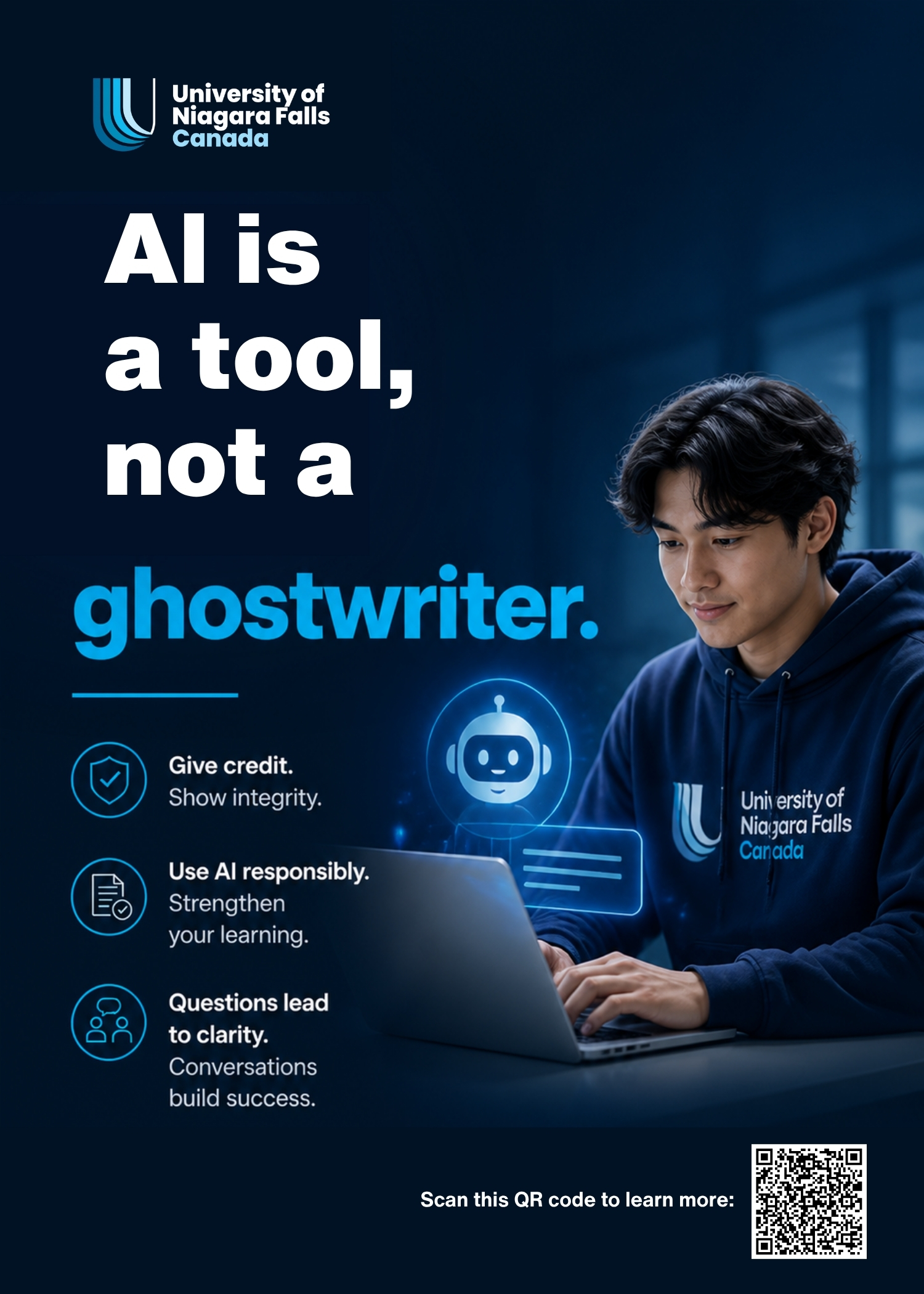
- Challenge
- International students were unclear on when generative AI was acceptable in coursework, when it had to be disclosed, and where misconduct began.
- Audience
- International students at the University of Niagara Falls, undergraduate and postgraduate.
- My role
- Solo. Research, strategy, messaging, creative concept, copy, visual design, social content, the website build, and measurement.
- Outcome
- Deployed and evaluated. Post-campaign questionnaire with 15 international-student respondents, plus platform analytics.
The brief
This was my master's capstone, and the problem was one I could watch happening around me. The University of Niagara Falls had an academic AI policy. It existed, it was public, and it was written the way policy is written — as a formal document, filed alongside the Turnitin and copyright policies, phrased for compliance rather than for a student at 11pm with an assignment due.
For international students the gap was wider still. Many arrive from academic cultures with different norms around collaboration, source use and attribution, and are then asked to navigate an unfamiliar integrity framework in a second or third language, while the tools themselves change every few months.
The result was not defiance. It was uncertainty: students did not know when AI use was acceptable, when it had to be disclosed, or at what point help became misconduct. My task was to close that gap with something students would actually use.
The strategic choice
The obvious campaign here is a warning campaign. Do not cheat. We will catch you. It is easy to write, it is easy to approve, and it fails, because it tells a confused student what not to do without telling them what to do instead. It also frames every student as a suspect, which is a poor way to start a conversation with people already working to belong somewhere new.
AI should support your thinking, not replace it. Always own the ideas and content you submit as your own. The campaign's governing principle
So I positioned the university as a guide rather than an enforcer, and made the campaign enabling instead of restrictive. It translates policy language into plain guidance, shows acceptable practice alongside the practices that create risk, and gives students a clear path from not knowing to acting with confidence.
The journey I designed against
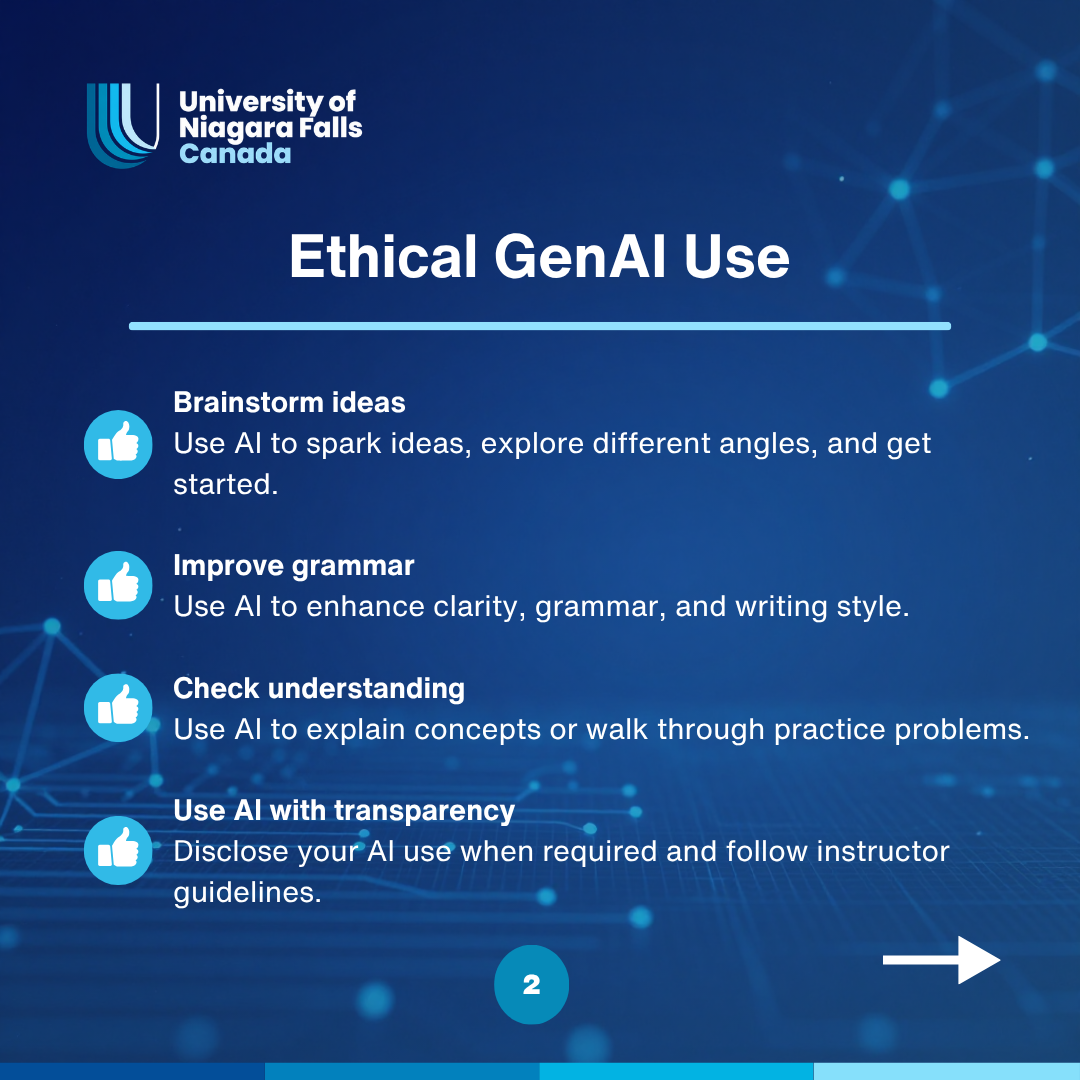
- Learn. Understand how AI can support work without replacing your own thinking.
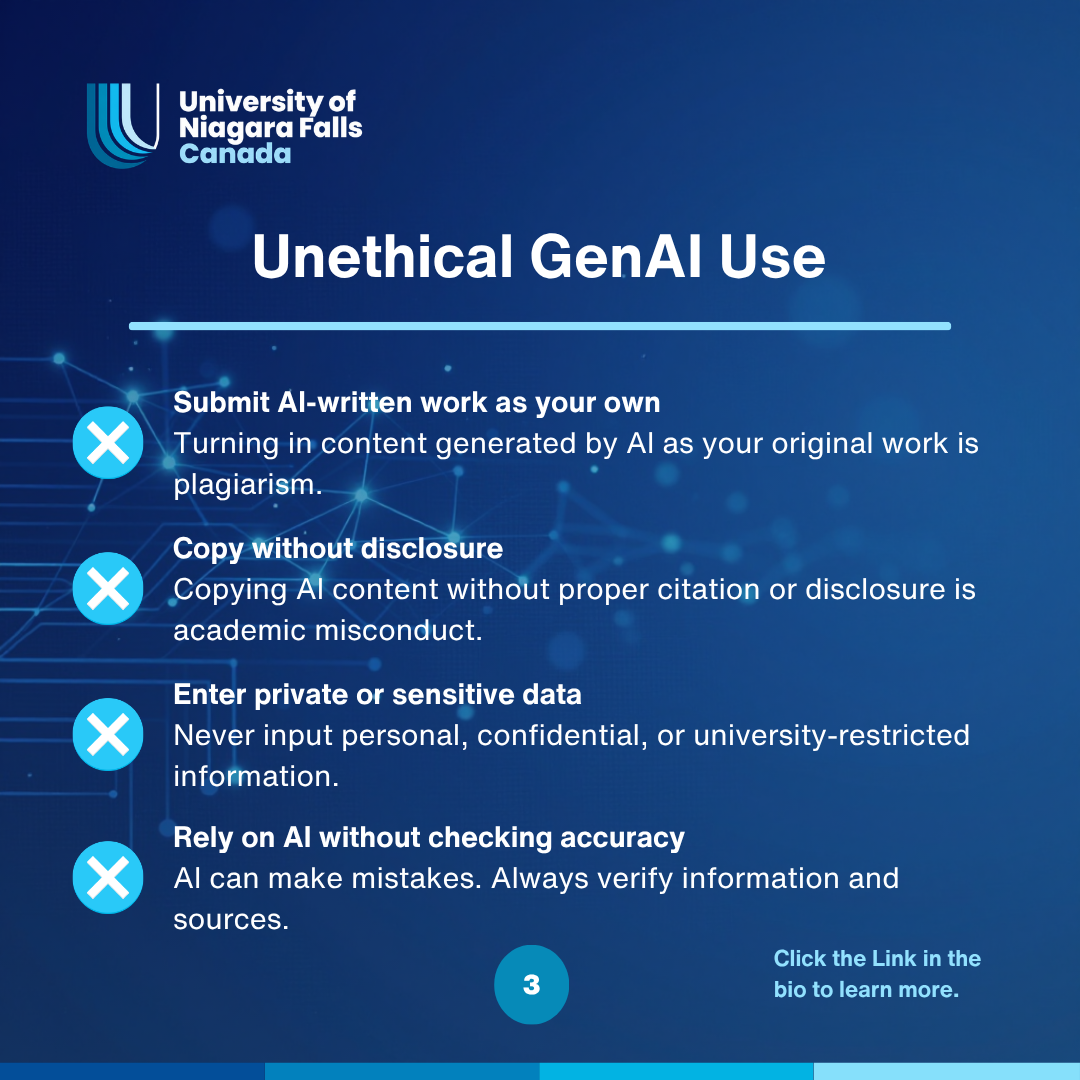
- Recognise. See the line between helpful use and practice that requires disclosure or counts as misconduct.
- Check policy. Reach the official guidance directly, rather than hearing it second-hand.
- Apply. Put it into practice with honesty, attribution and judgment.
That four-step structure became the architecture of the campaign hub, so the site itself teaches the sequence rather than just listing rules.
The work
The centre of the campaign is a responsive hub site that collects the guidance, practical tips and direct links to the official UNF AI, Turnitin and copyright policies in one place. I wrote, designed and built it. Around it sits a campaign asset system for the places students actually are: campus screens, Instagram and email.
- Campaign hub
- Responsive website covering ethical use, practices to avoid, student tips, policy reminders, support services and an FAQ, with direct links to official policy documents. View the live site.
- Digital billboards
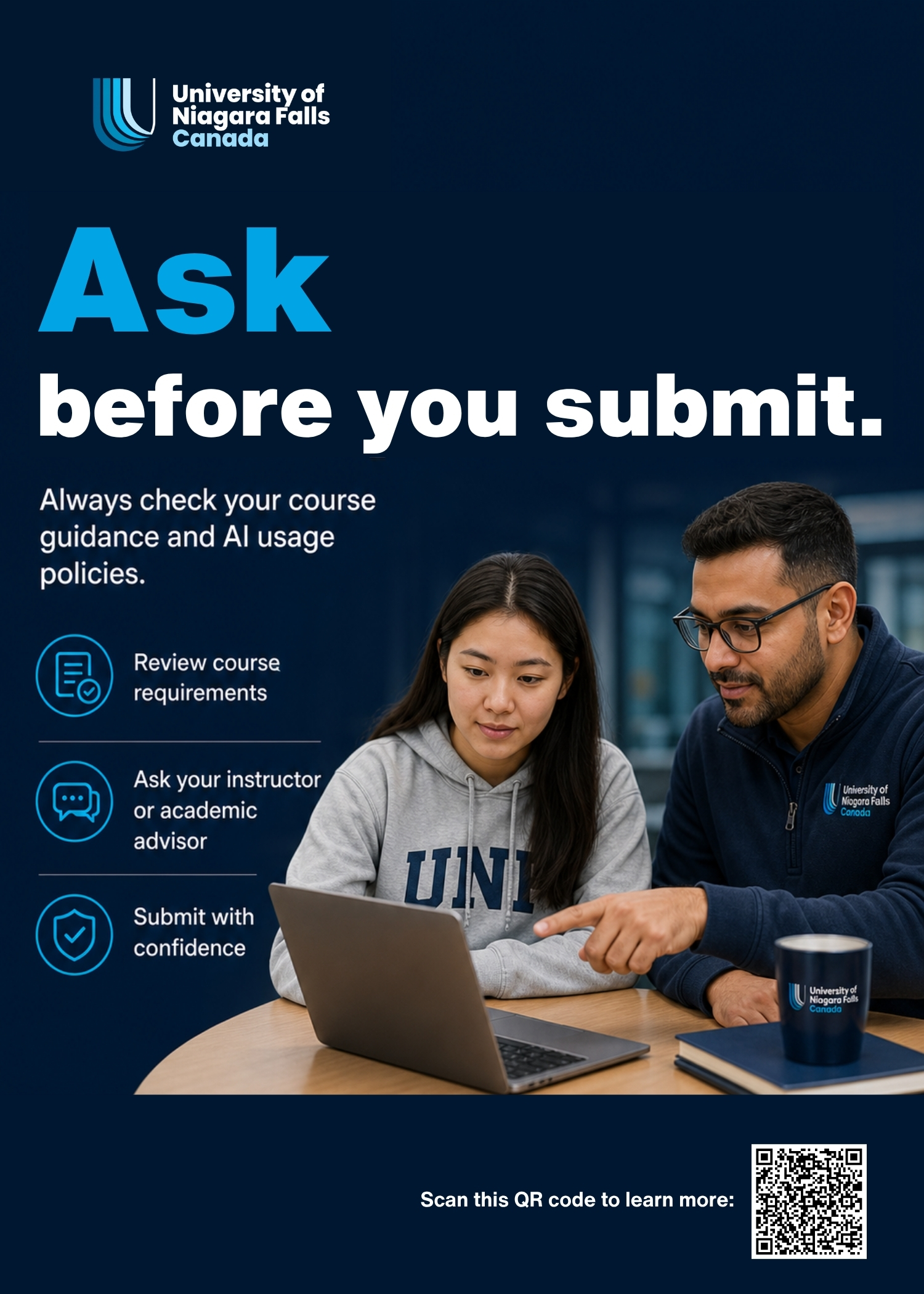
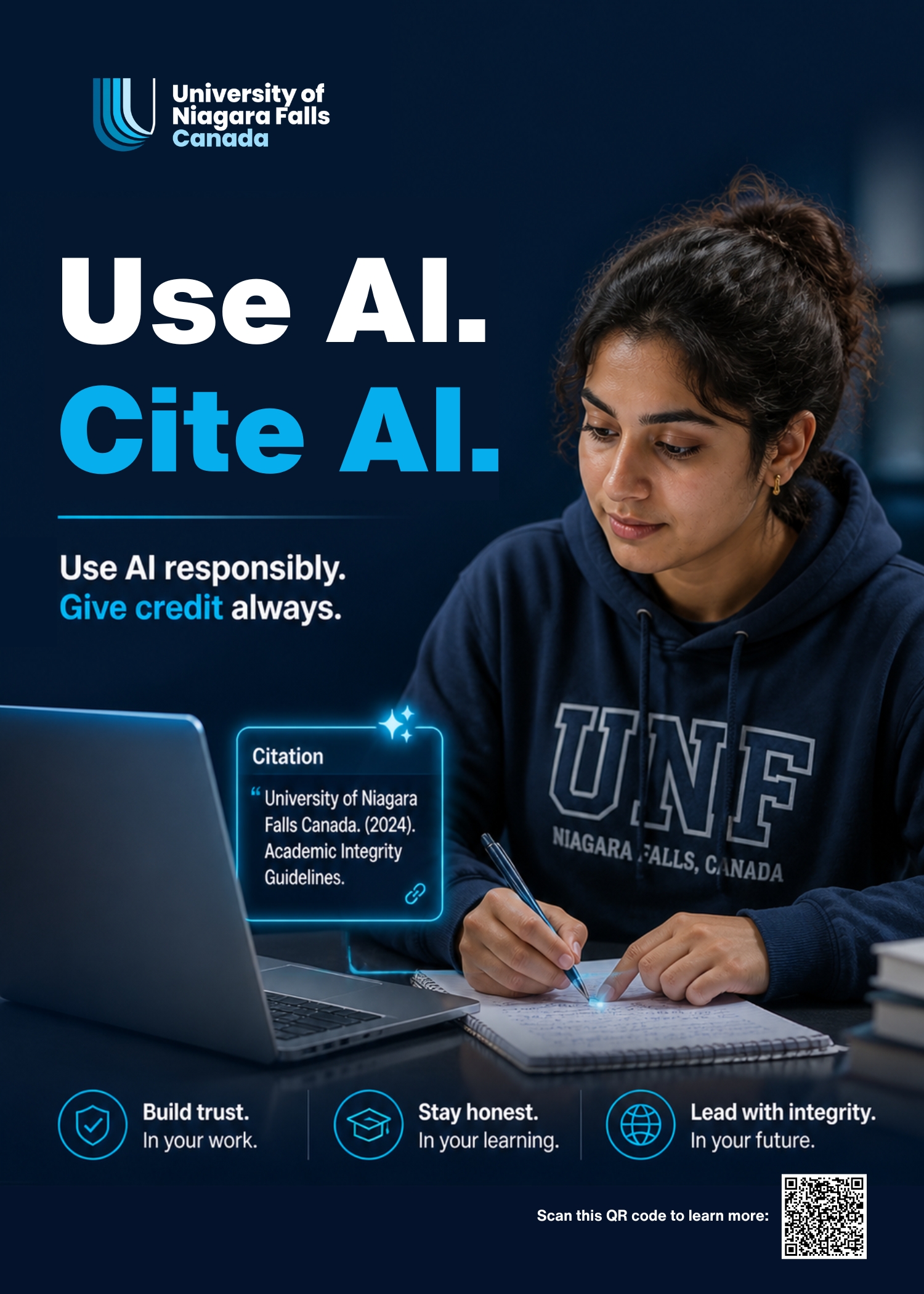
- Five hero visuals sized for campus display screens.
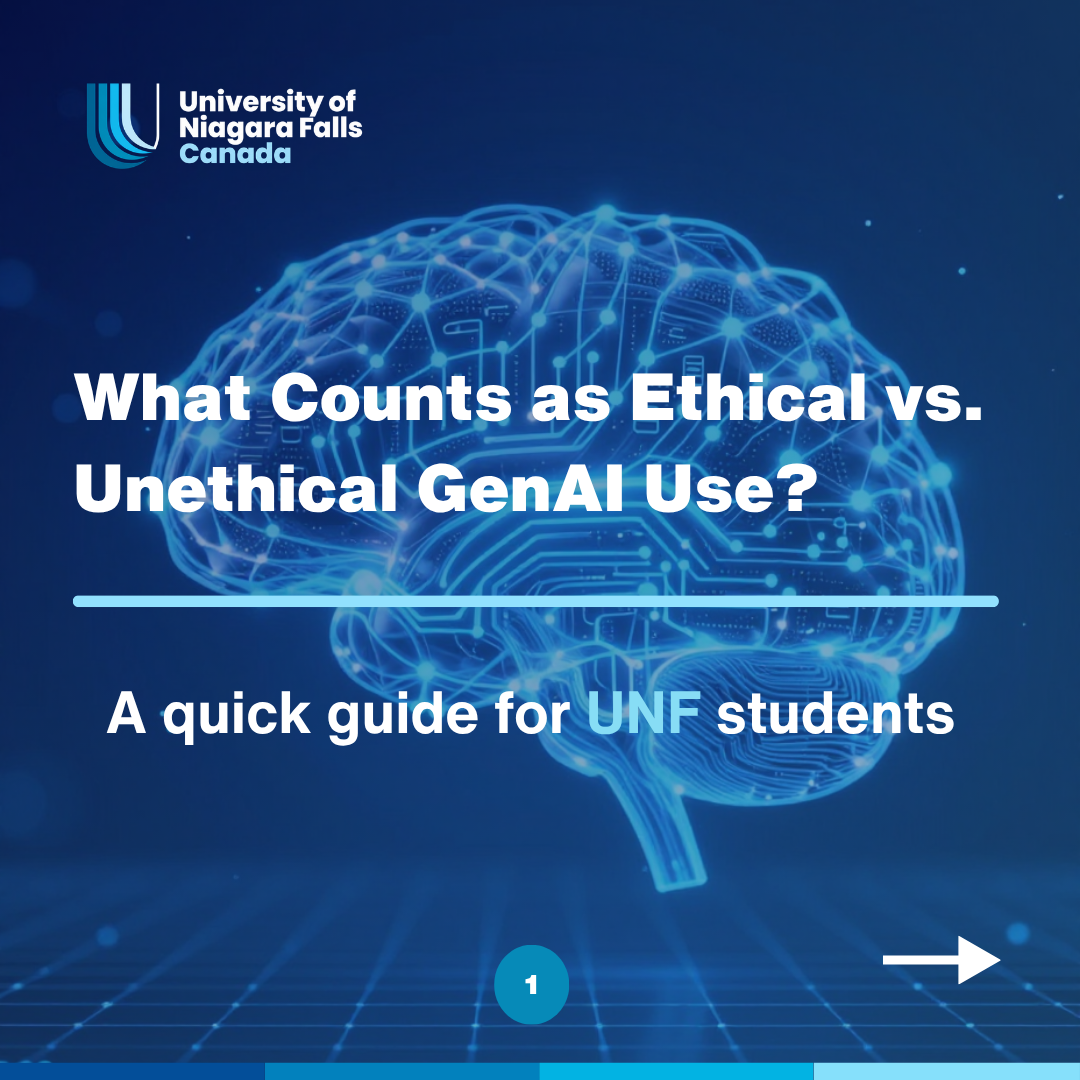
- Instagram carousels
- Three carousel sets of three frames each, taking one question per set.
- Infographic
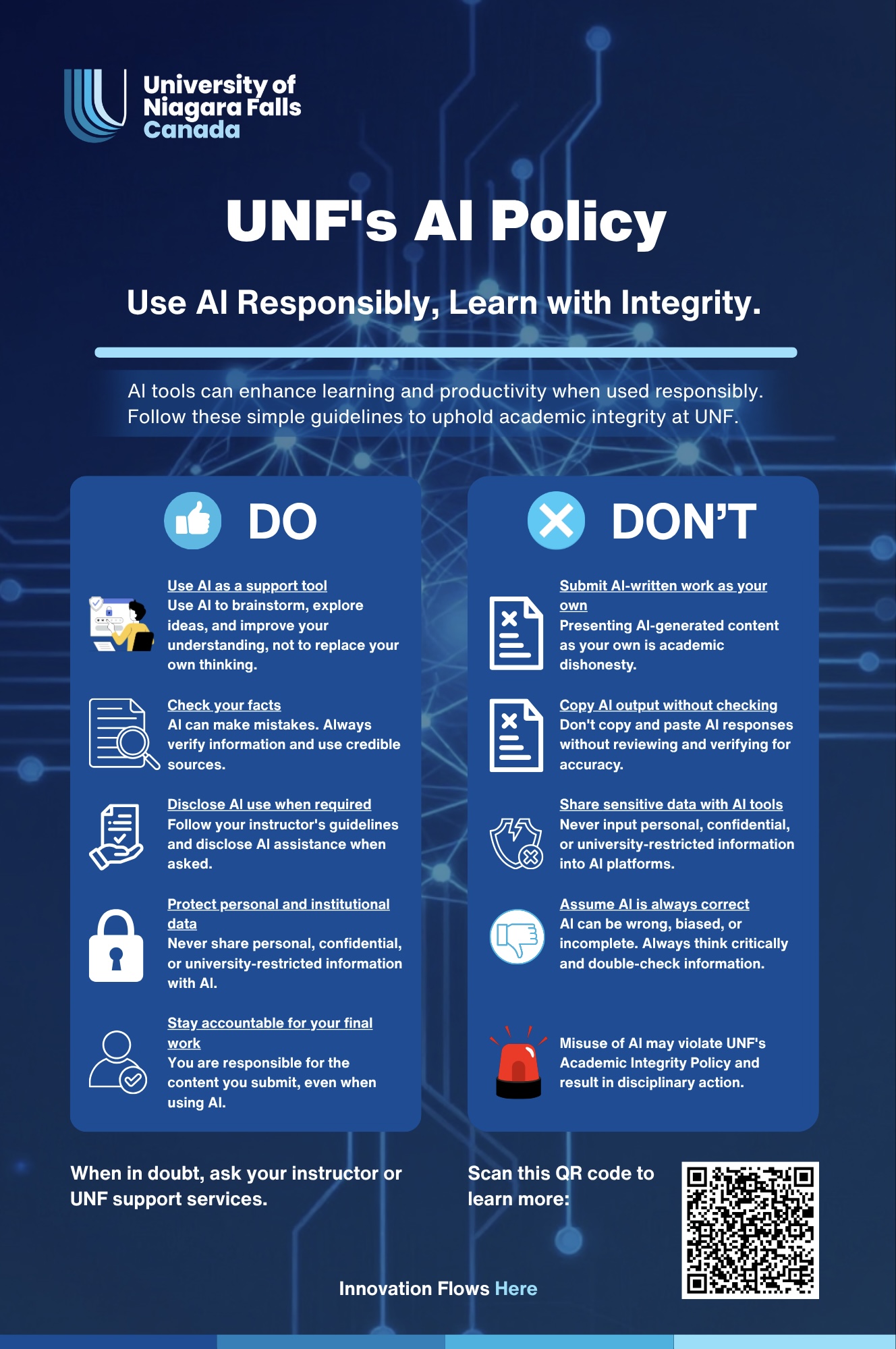
- A single shareable summary of the campaign messaging, designed to travel on its own.
- Email newsletter
- A newsletter layout for institutional distribution.
- Interactive FAQ
- A visual, interactive guide to the most common questions. Open the interactive FAQ.
What respondents reported
The post-campaign questionnaire included 15 international students at UNF, undergraduate and postgraduate (source: capstone research study). Instagram Insights recorded 124 carousel views during the campaign period (source: Instagram Insights).
92.9% was the reported positive-engagement result; respondents agreed or strongly agreed that the Instagram carousel was visually appealing and engaging (capstone questionnaire; 15 participants overall; item denominator not reported).
100% was the reported positive rating for improved understanding of responsible GenAI use (capstone questionnaire; 15 participants overall; item denominator not reported).
92.9% was the reported positive rating for improved ability to identify AI misuse and understand academic-integrity implications (capstone questionnaire; 15 participants overall; item denominator not reported).
100% was the reported learning-conversion result; respondents said the campaign helped them better understand ethical GenAI use (capstone questionnaire; 15 participants overall; item denominator not reported).
4.53/5 was the mean rating for understanding responsible AI use (capstone questionnaire; 15 participants overall; item denominator not reported).
4.53/5 was the mean rating for understanding what counts as AI misuse (capstone questionnaire; 15 participants overall; item denominator not reported).
4.33/5 was the mean rating for the carousel’s visual design and engagement (capstone questionnaire; 15 participants overall; item denominator not reported).
100% (15/15) of respondents said simple visual resources such as infographics, posters and email tips would help them use GenAI ethically (capstone questionnaire; n=15).
About these findings. Percentages and mean ratings are reproduced as reported. The study included 15 participants overall, but item-level response counts were not supplied; those results should not be read as counts out of 15. They describe this respondent group, not the wider student population.
Full methodology, instruments and findings are in the capstone research report, which I am happy to share on request. The research was conducted under TCPS 2: CORE research-ethics certification.
What I took from it
The useful lesson was about register. The same information framed as a prohibition and framed as a guide produces very different behaviour, and the guide version is harder to write because it has to be specific. "Do not cheat" costs nothing to say. "Use AI to generate an outline, then shape it into your own work, and disclose it when it contributed meaningfully" requires you to have actually decided where the line is.
The second lesson was structural. Linking directly to official policy rather than paraphrasing it meant the campaign could stay plain-spoken without becoming the authority on what the rules are. It supports policy instead of competing with it, which is also what made it safe to publish.
I also used generative AI tools throughout the project itself — for research acceleration, content development and asset production — and built KPI dashboards to track awareness, engagement and conversion. Running a campaign about responsible AI use while using those tools responsibly was, usefully, the whole point.
Got a brief that needs taking from insight to shelf?
I am looking for a creative marketing role with a Canadian agency or in-house team. The fastest way to reach me is email, and I reply to everything.